
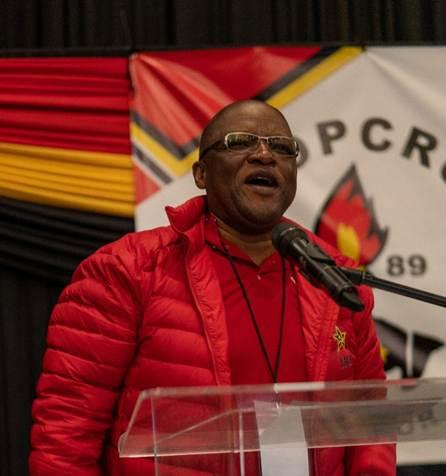
By Dr Zizamele Cebekhulu-Makhaza, Chairman of the Safer South Africa Foundation
No number of boots on the ground will make up for critical structural, leadership, and operational failures inside the criminal justice cluster (CJC). Any serious reform must confront the machinery of justice itself, instead of pretending South Africa’s crime crisis can be solved through resourcing alone.
The consequences of institutional failures are most visible in the distance between the justice South Africans are promised under the Constitution and the realities they experience every day, especially when serious crimes are no longer being solved with the consistency communities have a right to expect.
Worryingly, the South African Police Service’s (SAPS) ability to solve murders has declined by as much as 38% over the past decade. Additionally, according to Afrobarometer, a survey research network, only a quarter of South Africans say they trust the police – the lowest level of confidence recorded in two decades. Behind these figures are communities living with real fear, trapped in a justice system that cannot protect them properly.
As Chairman of the Safer South Africa Foundation, the social justice wing of the Police and Prisons Civil Rights Union (POPCRU), and as someone who has worked inside the police and prisons sector for decades, I must be direct: South Africa cannot keep asking frontline officers to carry a system that’s failing them.
To fully restore confidence in the CJC, the powers that be must start by addressing seven key priorities:
- Professionalising police management
Police officers must be allowed to focus on their primary roles: fighting crime and maintaining public safety. Critical management and administrative functions, including finance, human resources, and strategic planning, must be entrusted to qualified civilian professionals with the relevant expertise.
Too often, skilled professionals with appropriate qualifications are overlooked or sidelined, weakening the service’s ability to manage resources and personnel effectively. True leadership reform means empowering operational police officers to concentrate on crime fighting, while experts handle the management responsibilities that keep the service functioning.
- Decentralising operational authority
Too many decisions inside the CJC are still made at the national head office, far from the communities where crime is actually happening. Policies, budgets, police station planning, vehicle allocation, and operational priorities are often decided without meaningful consultation with provincial commanders who intimately understand local crime dynamics.
Budget control and operational authority must be decentralised and moved closer to provincial offices so that resources are deployed where they are most needed, not where distant officials assume they should go.
- Reforming the National Commissioner appointment process
The appointment of the National Commissioner is one of the clearest tests of whether political oversight strengthens policing or weakens it. Responsible political leadership must address leadership and structural deficiencies without turning the police service into an extension of political interests.
The process must be transparent, merit-based, and accountable to Parliament and the public, so that the person appointed can restore confidence, protect operational independence, and ensure the police service fulfils its constitutional mandate.
- Extending provincial commissioner tenures
Provincial commissioners need enough time to understand the crime patterns, resource pressures, and operational weaknesses in their provinces. Resource allocation is too often detached from the realities officers face on the ground. Budgets and assets are controlled by officials who may have little understanding of local policing conditions, while constant provincial leadership changes deepen the disconnect.
The result is serious operational waste: vehicles are assigned without regard for geography or crime patterns, and officers can be unfairly dismissed through administrative decisions made by people without the proper operational understanding.
- Restoring the civilian secretariat’s oversight role
Civilian oversight structures must be restored to their proper function. The civilian secretariat was meant to strengthen accountability, monitor policing, and keep the police service connected to the constitutional rights it exists to protect.
When these structures are rendered ineffective, public trust weakens and failures inside the service are allowed to continue without enough pressure for correction. Oversight must be strong enough to demand answers without drifting into day-to-day operational interference.
- Unifying fragmented policing structures
Police must protect the constitutional rights of all citizens, but fragmentation between national police, metro police, and other units has weakened that mandate. The Constitution calls for one police service under a single national commissioner to ensure unified command and accountability. Communities cannot be properly protected when policing structures overlap, compete, or operate without clear lines of responsibility.
- Rebuilding community policing capacity
Community policing structures must be treated as part of the country’s crime-fighting capacity. Properly supported community engagement builds trust, improves crime reporting, and gives police access to the local knowledge they need to prevent and respond to crime. When these structures are weakened or left inactive, the police lose one of their most important links to the communities they serve.
The CJC’s structural and operational failures leave communities exposed, weaken confidence in the rule of law, and make every part of the justice system less able to act with the authority needed. Reforming the CJC will not solve every cause of crime, but it will give the country a stronger foundation for prevention, enforcement, accountability, and public trust.

