
African drivers have been missing from the F1 grid for 46 years. WORR Motorsport is building the pathway back.
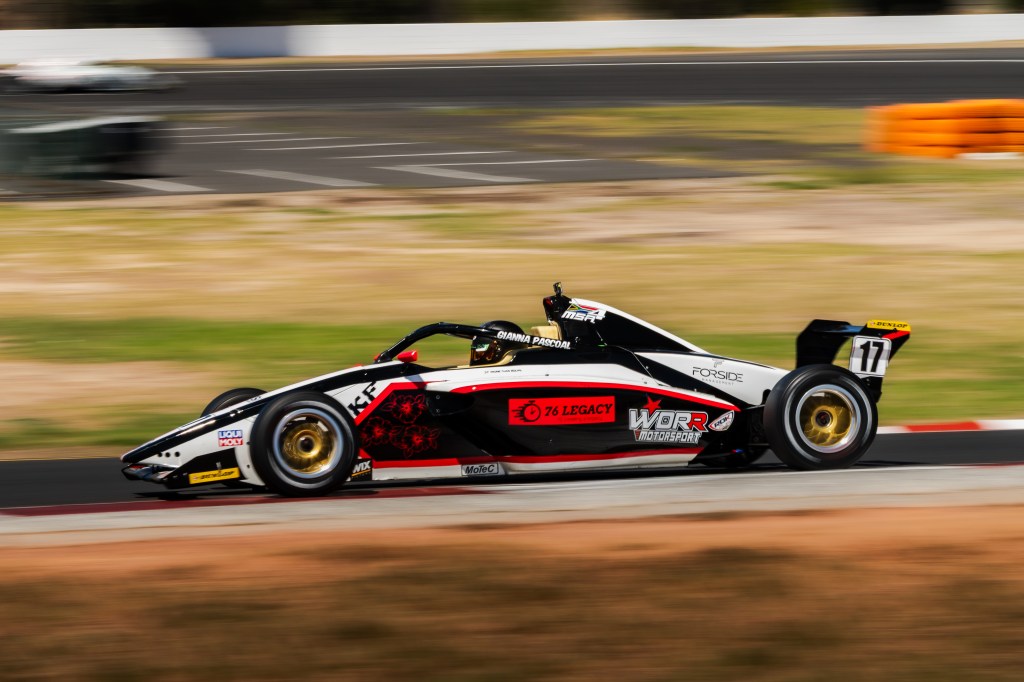
Africa has not produced a Formula 1 driver in more than four decades. South African motorsport development organisation WORR Motorsport, is working to change that through a structured development system aimed at taking African talent from grassroots karting onto the international single-seater racing ladder.
The last African driver to compete in Formula 1 was South Africa’s Jody Scheckter, the 1979 world champion who retired from the sport at the Italian Grand Prix in 1980. In the decades since, Formula 1 has produced champions from across Europe and South America, but none from Africa – a continent of 1.4 billion people with a well-documented culture of competitive sport.
According to WORR Motorsport founder Wesleigh Orr the absence has never been about a lack of ability. Instead, he says the sport has lacked the credible development structures needed to find promising drivers, develop their skills, and progress them toward the Formula 1 grid.
In response, the organisation is implementing a continent-wide programme designed to dismantle the financial and infrastructural barriers that have historically kept African drivers out of the sport’s highest levels. A key part of its strategy is its new manufacturing partnership with TB Kart, one of the world’s leading karting manufacturers, to produce karts on the African continent and reduce the cost of entry into the sport.
Competitive karting equipment is typically imported into African markets, significantly increasing the financial burden on families hoping to support young drivers. Through the partnership with TB Kart, kart costs are already 20-30% lower than standard import pricing, with a five-year target of reducing prices by up to 55% while maintaining the same competitive equipment standards used internationally.
Lowering equipment costs is essential if the sport is to become accessible to a wider pool of young racers, notes Orr.
“Africa has never lacked talented drivers. What we have lacked is a system that allows those drivers to progress. If the cost of entry is too high, many never even get the opportunity to start. Reducing that barrier to entry is the first step in building a genuine pipeline for African motorsport to succeed on the world stage.”
The organisation has also been appointed the official Pan-African distributor for TB Kart’s rental kart range – a development that will expand the programme’s access to karting circuits and venues across the continent, widening the base from which future racing talent can be identified.
The combined effect will be a meaningful reduction in expense at every level of the sport, from a child’s first experience of a rental kart to a young driver’s first competitive season.
Early results emerging
While its long-term ambition is to develop African drivers capable of reaching the Formula 1 grid, the programme is already producing results at junior levels of international motorsport.
WORR Motorsport’s academy currently has 15 drivers preparing to compete in the coming weeks, as well as alumni racing for professional teams across Europe and Asia. Drivers developed through the programme have further recorded victories in competitions such as the ROK Cup, the Rotax Max Challenge, and in FIA-sanctioned karting categories.
The 2026 season will also mark a milestone for the programme when Gianna Pascoal becomes Africa’s first female driver to compete in Formula 4 competition through the WORR development pipeline, taking an important first step on the single-seater ladder that leads to Formula 1.
“These milestones are important because they demonstrate that African drivers can compete against the best in the world when the right structures are in place,” Orr says.
“Gianna has worked incredibly hard to reach this point. Seeing her finally step onto the Formula 4 grid is an exceptionally proud moment for our programme, as well as an encouraging signal to other young drivers across the continent that the pathway we are creating is real.”
Expanding footprint and FIA support
The model established in South Africa is now extending beyond the country’s borders to the rest of the continent. A fully operational karting hub in Rwanda is confirmed for launch within the next twelve months, and will become the second centre in what WORR Motorsport intends to develop as a continent-wide network of driver development hubs.
Each hub will provide coaching infrastructure, competitive racing programmes, technical training, and mentorship, allowing drivers to develop locally rather than relocating to Europe at an early stage of their careers. In addition to drivers, the hubs are also designed to develop and support a broader ecosystem required by professional motorsport, including engineers, mechanics, data analysts, and team managers.
As part of its expansion, WORR Motorsport also owns Karting Africa, a platform focused on growing grassroots participation and competitive karting across the continent. Its upcoming Karting Africa Ghana Showrun 2026, scheduled for May, has received formal endorsement from Ghana’s National Sporting Authority (NSA), and is expected to attract as many as 40,000 attendees.
Applauding the organisation’s efforts, Rodrigo Rocha, FIA Vice-President for Sports (Africa), has aligned with WORR Motorsport’s programme – a notable endorsement from the global body that governs Formula 1 and every major international motorsport series.
“For the good of our communities across South Africa and the wider continent, WORR Motorsport is ensuring that young people are no longer excluded from our sport. This is proof that Africa is not just waiting to be invited into the future of motorsport, but instead is building the future, right here, right now, on African soil,” he states.
With drivers already progressing through its pipeline, international partnerships secured, new development hubs planned, and the FIA’s public backing confirmed, Orr believes the foundations of that future are already taking shape and delivering.
“Africa has waited 46 years. Now the road back to the Formula 1 grid begins.”
 Lani Magazine