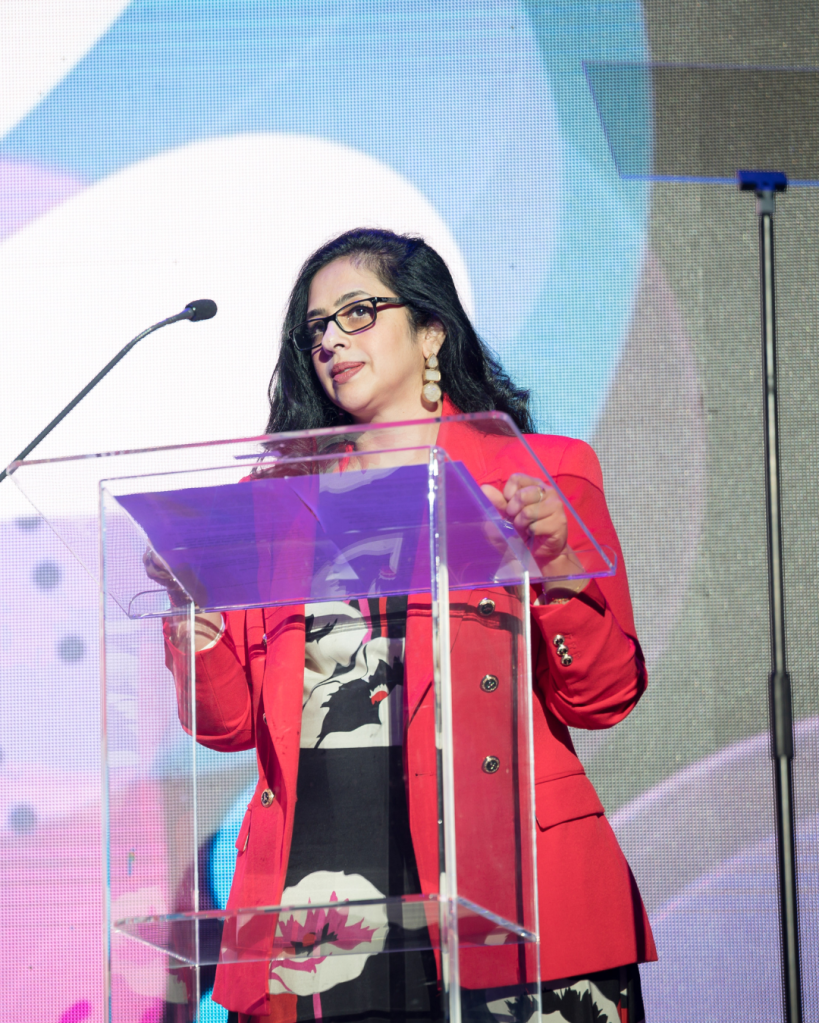
Over the past decade, the conversation around women in leadership across Africa has shifted decisively. What began as a demand for representation has evolved into women asserting their authority across capital allocation, governance, enterprise and culture – a trend the FORBES WOMAN AFRICA Leading Women Summit has both mirrored and helped accelerate.
Now in its 11th edition, the summit is set to return to the Sandton Convention Centre on March 18, 2026, gathering trailblazing female leaders in Africa’s business, policy and cultural landscape to steer dialogue around the most pressing questions facing society today.
Convening under the theme “The Voice, Vision, and Victories of Her Africa”, this year’s program will examine how women leaders are navigating economic uncertainty, advancing artificial intelligence across high-growth sectors, shaping ethical and gender-responsive policy frameworks, strengthening sustainability initiatives, and expanding access to capital for scalable enterprises.
Roberta Naicker, chief executive officer (CEO),FORBES AFRICA, says that over the past 11 years, the summit has grown into a platform that both celebrates leadership and actively connects women defining the continent’s economic and institutional future.
“The role it plays in connecting women is particularly critical. The Leading Women Summit brings together founders, executives, policymakers, and cultural leaders who are already driving change,” she says.
“What makes the platform so powerful is the ability to convene individuals who are shaping their industries and the broader economic conversation across Africa.”
Renuka Methil, Managing Editor of FORBES AFRICA and FORBES WOMAN AFRICA, notes that the continued growth of the event reflects broader changes in influence across the continent.
“Women are no longer seeking entry into boardrooms but shaping them instead. They are influencing investment decisions, leading regulatory conversations, building enterprises that compete across borders, and redefining governance standards across sectors.
“We’ve seen a transition from participation to authority, and the summit has become one of the defining events where that authority converges.”
Recognition as economic leverage
In high-trust environments such as boards, investment committees and executive leadership structures, credibility is currency. Third-party recognition is a strategic lever for leaders seeking to reinforce stakeholder trust and unlock new opportunities.
Awards and high-profile summits generate the reputational capital needed, providing independent validation that reinforces executive standing across markets.
Since its inception in 2016, the FORBES WOMAN AFRICA platform has served as a reputational accelerator, spotlighting leaders whose impact spans business, global trade, policy, sport, entertainment and social transformation. In doing so, it has helped build a visible pipeline of renowned female leadership across the continent.
For example, the FORBES WOMAN AFRICA Awards have celebrated some of the continent’s most influential women – leaders who have shaped policy, strengthened institutions and expanded Africa’s global influence. These include global policy leaders such as Ngozi Okonjo-Iweala and Amina J. Mohammed, enterprise builders like Bethlehem Tilahun Alemu, and cultural icons such as Tiwa Savage.
The impact of platforms like this is evident across sectors:
- Women are increasingly taking up board and executive leadership roles across corporate South Africa and the continent.
- Female founders are building export-ready enterprises and scalable brands.
- Policy leaders are driving regulatory reform tied to trade, sustainability and economic inclusion.
- Cultural leaders are converting influence into commercially viable ecosystems.
The power of proximity
This influence is not coincidental. Beyond the on-stage program and accolades, the summit has become one of the rare forums where some of the continent’s most influential decision-makers share space.
In business environments where networks and relationships often determine opportunity, this proximity is key. Curated rooms provide the launch pad for high-impact partnerships and cross-market collaborations that may not have occurred through traditional channels.
“These convenings matter because influence is relational. When credible leaders connect in one room, opportunities move faster. In a landscape where access to power circles remains uneven, bringing this caliber of leadership together offers the strategic opportunity for attendees to build network equity,” adds Naicker.
The 2026 Leading Women Summit is supported by organizations who share FORBES WOMAN AFRICA’s commitment to leadership and economic progress. McDonald’s South Africa returns as presenting partner, with ABSA South Africa as the official banking partner. Stanford Seed Graduate School of Business and Eskom join as strategic collaborators, strengthening the summit’s focus on enterprise growth, financial leadership and long-term sustainability.
Tickets for the 2026 Forbes Woman Africa Leading Women Summit and Awards are now available at:https://www.webtickets.co.za/v2/event.aspx?itemid=1576335252. Limited seating is available.
 Lani Magazine